 Nederlands
  English
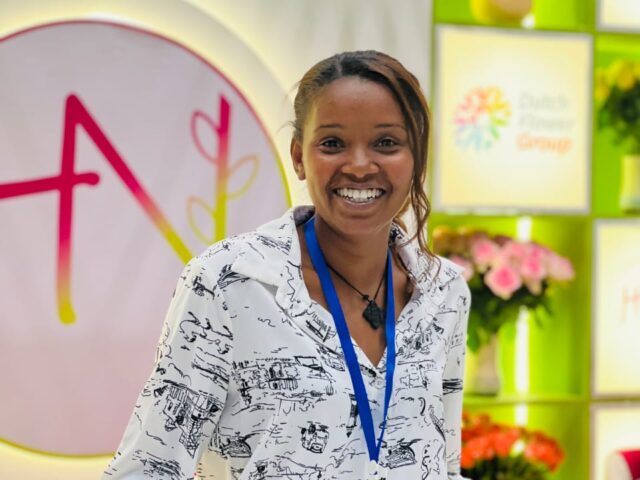
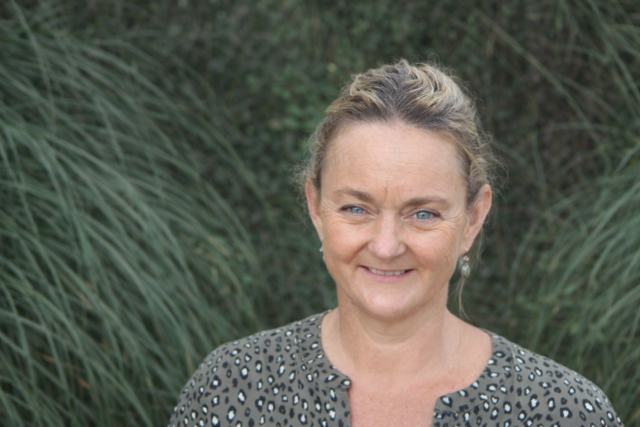
 Meet Carla Ulyate
Every week, containers filled with roses depart by sea from Nini. This may seem straightforward, but it was preceded by a long period of testing and fine-tuning—and that process is still ongoing. Since 2019, Carla Ulyate has been working as Systems Development Manager to improve sea freight in practice. Together with her colleagues, she continues to search for new insights and varieties that are suitable for transport by sea. In this interview, Carla explains everything that goes into it.
From experiment to daily practice
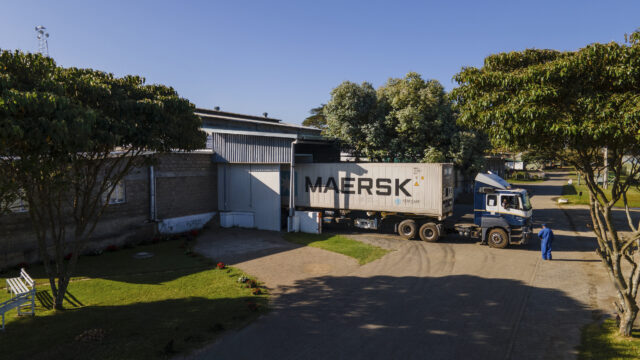
The first technical trials with sea freight began as early as 2017. The real acceleration came during the COVID period, when air freight became increasingly difficult and alternatives were needed. In 2023, Nini reached its first peak: that year, more than 70 million stems were transported by sea container.
Due to disruptions in shipping routes via the Red Sea, volumes later declined again, but the work continued as usual. “Operationally, we can fill a container every day,” Carla explains. “In practice, we usually ship two containers per week. That depends on factors we don’t always have control over.”
Where it gets complicated
According to Carla, the biggest challenge isn’t one clearly defined problem. “There are so many factors that influence the final result. The challenge is understanding which ones really make the difference.”
Sea freight places high demands on the product. Everything has to be right—from cultivation and cutting moment to cooling, packaging, and transport. “We ask a lot from the rose. That means there is very little margin for error.”
Preparing a rose for a long journey
That roses can be on the road for weeks and still arrive in good condition starts in the greenhouse. “They need to enter the process in the strongest possible condition,” Carla explains. “Our task is to preserve that quality as well as possible along the way.” It’s not a matter of making one single adjustment.
“There isn’t a single step you can skip. Even small deviations can make the difference between a good arrival and disappointment.”
Testing, repeating, and learning
New ideas are always tested step by step. We start with small trials to quickly see what has potential. “If something looks promising, we repeat it in a real container. Only when the results remain consistently good do we move forward.”
The choice of varieties plays a major role in this. “Some varieties are simply not suitable for sea freight. Others perform surprisingly well.” That’s why every container also includes new trials. “That’s how we keep learning and looking ahead.”
Shared responsibility
Sea freight is not a one-person project. “A lot of people are involved,” Carla says. “If you add it all up, more than a hundred people work on a single container.”
Everyone has an impact on the final result, and everyone notices when things go well. “That shared interest makes collaboration natural. It can only succeed if everyone takes their role seriously.”
Building trust
The most important lesson so far, according to Carla, is actually very simple but essential: “That it’s possible. And that it can be done well.” That realization built confidence, even at times when not everything went according to plan.
That confidence was necessary to keep investing and to dare to take risks. “Without it, we never would have been able to work toward an approach that is reliable enough for daily operations.”
Why this matters
For Carla personally, the turning point came when the CO₂ footprint of sea freight was compared with that of air freight. “The savings are almost four kilograms of CO₂ equivalent per kilogram of transported flowers. That’s knowledge you can’t ignore.”
Together with the technical proof, that provided a clear direction. “That’s when I knew: this is why we choose this, and why we will continue with it.”