 Nederlands
  English
 Philippe on a different way of controlling pests
For Philippe Veys, the future of rose cultivation is clear: as little chemistry as possible, and eventually none at all. As director and co-owner of Nini and Herburg Roses, we work on this every day, together with our teams and partners, step by step.
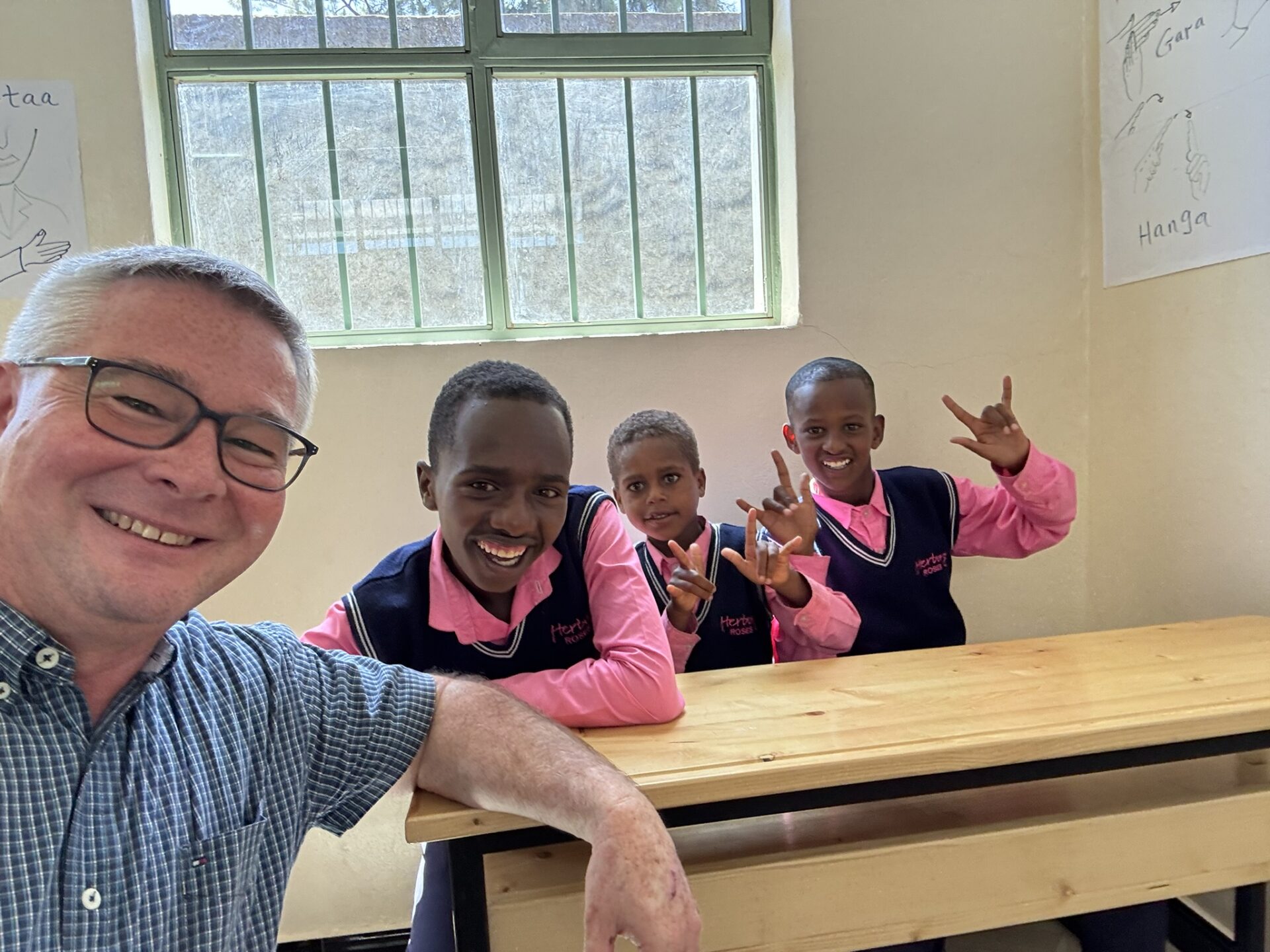
Philippe has been active in the flower and especially rose world for more than thirty years
That many years of experience ensures that he not only knows what is technically possible, but also how changes really take hold on the work floor. “It’s not about quick fixes,” he says, “but about choices that you maintain and can continue to improve.” Based on that conviction, we work daily on a cultivation method that is smarter, more careful and more future-proof.
Chemical and biological: what is the difference?
Within cultivation, a distinction is often made between chemical and biological crop protection products. Philippe clearly explains the difference. “Chemical agents are synthetic and developed in a laboratory. They are often broad-spectrum and can remain present in soil and water for longer.”
Biological agents are different in nature. “They are based on natural sources, such as bacteria, fungi, plant extracts or other organisms,” he says. “They are usually much more specific and focus primarily on the target pest. As a result, they are often less harmful to humans and animals.”
Why this topic plays such an important role
The fact that Philippe has been working intensively on this for so long is no coincidence. “I have been working in the flower and rose world for many years and have always had a broad interest in this subject,” he says. But above all: it is alive within the company. We are actively working on it every day with our teams and continue to look for improvements. The ambition is clear.
We believe that we should move away from chemistry as much as possible, with the ultimate goal of no chemistry at all.
We have been actively working on this for years and have already achieved significant reductions. Together with suppliers, we are constantly working on alternatives, such as biological agents and natural enemies. Especially with pests such as spider mites and thrips, we see that the finish line is getting closer and closer.
What types of crop protection products are there?
Crop protection has several forms. Insecticides are used to control insects that cause damage to the crop. Fungicides help control fungal diseases such as botrytis and mildew.
“It is a broad playing field,” says Philippe. “That is precisely why it is important to look at what is needed per situation, and whether there is an alternative that better suits our way of working.”
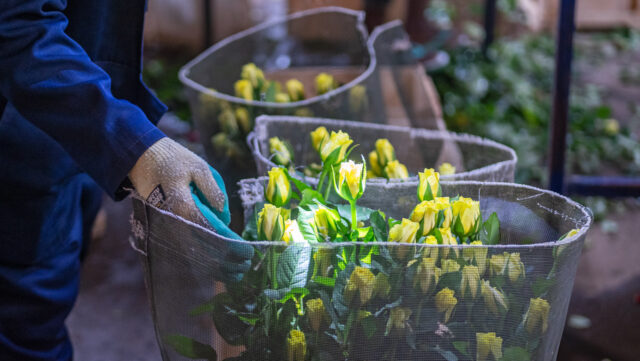
Step by step towards a different way of cultivating
The approach at Nini and Herburg Roses is deliberately practical. We have intensive contact with suppliers and continuously set up trials. Everyone is involved, from cultivation to scouting and R&D.
A good example from practice is that a number of greenhouses at Nini are fully biologically equipped. “Then you look at what you run into,” Philippe explains. “And from there you start looking for solutions. That yields an enormous amount of knowledge.”
Variety selection also plays an important role. We work closely with breeders and are constantly looking for stronger, more resistant varieties. Less resistant varieties are replaced sooner. In addition, breeders are actively present on location and we have our own R&D department that focuses on variety development and finding alternatives to chemistry.
The results are visible. “Last year we again used 25 percent less chemistry,” says Philippe. The agents that are still used are legal, comply with the FSI guidelines, are permitted in the EU and almost all fall within the so-called green class.
The role of scouts
An indispensable link in this process are the scouts. They check all greenhouses twice a week and map the entire cultivation. “Based on that, we determine our strategy for crop protection every week,” Philippe explains. We also set annual targets that we regularly evaluate and adjust where necessary.
At Nini, approximately 35 scouts work on an area of 60 hectares. In Ethiopia, there are about 25 on 40 hectares. Without this continuous monitoring, we would not be able to take these steps.
Why 2030 is a realistic goal
The fact that Philippe believes that we can cultivate almost completely chemical-free in 2027 and completely in 2030 is based on experience and results. Due to the rapid development of biological agents and the availability of increasingly resistant varieties, this goal is becoming increasingly realistic. Within the sector, there is also a growing realization that things must and can be done differently. “As a company, we think this is extremely important,” Philippe concludes. “We can demonstrate that we are making progress. In combination with stronger varieties and increasingly better biological solutions, 2030 is a realistic goal for us.
With this approach, we continue to work every day in the greenhouse on a cultivation method that is becoming increasingly careful and future-proof.